Less than 120/80 mm Hg
Often described as normal for most adults. Elevated begins at 120-129 systolic with diastolic less than 80. Stage 1 hypertension is 130-139 or 80-89. Stage 2 is 140 or higher or 90 or higher.
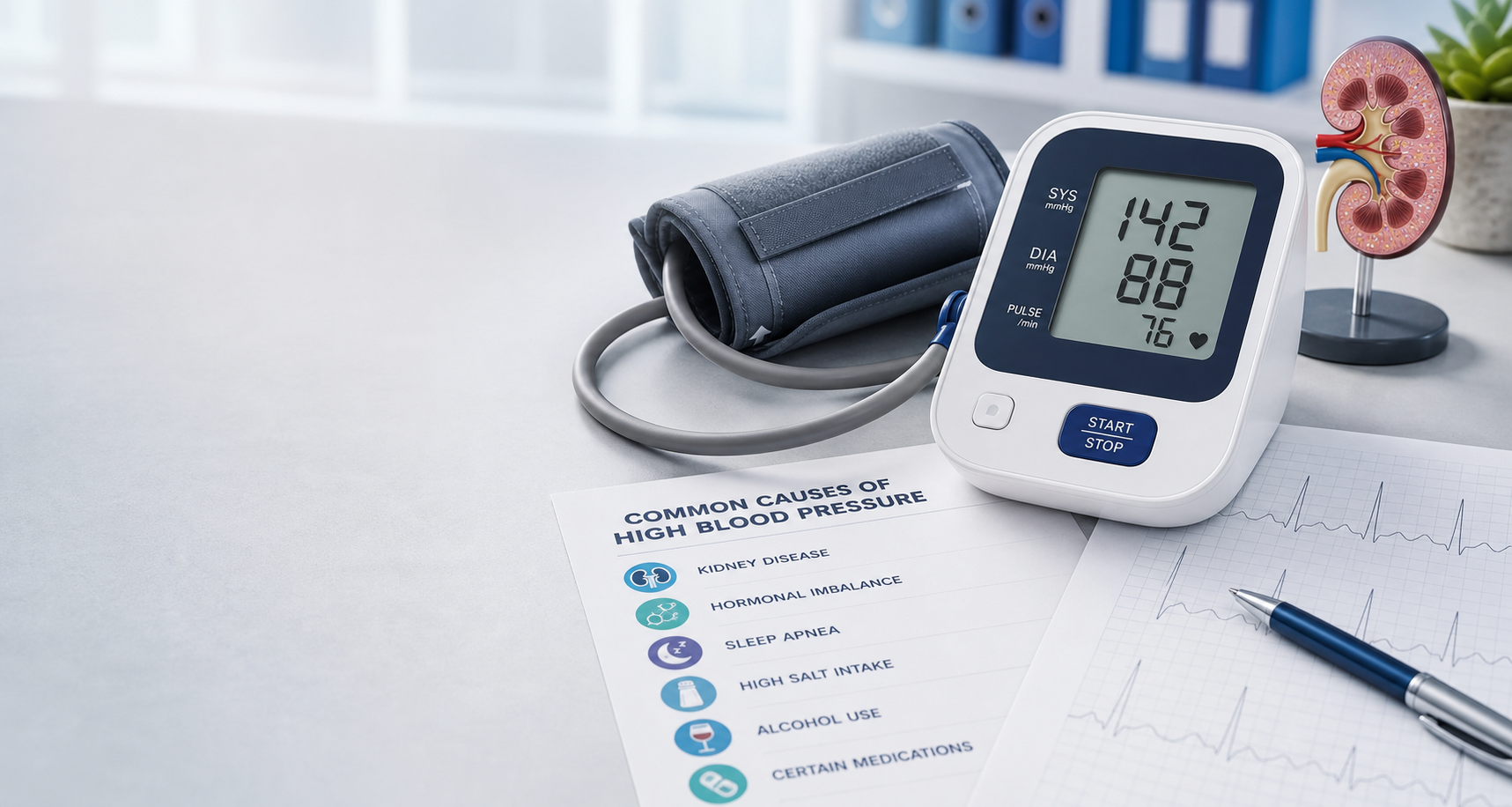
Blood pressure changes all day and all night
High blood pressure can be silent for years while it strains arteries, heart, brain, kidneys, and eyes. A 24-hour ambulatory blood pressure monitor helps reveal the real pattern: awake, asleep, stressed, walking, working, and resting.
Why it matters
Blood pressure is not only a number. It is a repeated physical load on blood vessels. When it stays high for months or years, the body may adapt silently while the risk of stroke, heart attack, heart failure, kidney disease, vision loss, and artery disease rises.
Many people feel perfectly well with high readings. Some have normal numbers in the clinic but high numbers at home or overnight. Others have high clinic readings because of stress but safer readings away from the clinic. This is why repeated, well-measured blood pressure is much more useful than guessing from symptoms.
For a deeper explanation of causes, hormones, kidney disease, sleep apnea, medicines, symptoms, and treatment basics, visit BloodPressureCauses.com. For the wider ANONAMED medical network, visit ANONAMED.com.
Numbers to know
Only a clinician can confirm a diagnosis, and personal targets may differ in pregnancy, frailty, diabetes, kidney disease, heart disease, or after stroke.
Often described as normal for most adults. Elevated begins at 120-129 systolic with diastolic less than 80. Stage 1 hypertension is 130-139 or 80-89. Stage 2 is 140 or higher or 90 or higher.
A common diagnostic approach records two readings morning and evening for at least 4 days, ideally 7 days, then averages the readings after day 1. NICE uses a home average of 135/85 mm Hg or higher to help confirm hypertension after a raised clinic BP.
Many services use the average during usual waking hours. NICE recommends at least 2 measurements per hour while awake and uses a daytime ABPM average of 135/85 mm Hg or higher to help confirm hypertension after a raised clinic BP.
Blood pressure normally falls during sleep. A 24-hour monitor can show nocturnal hypertension, reverse dipping, or a poor night-time dip, patterns a daytime cuff or clinic visit can miss. Night-time BP is one of the major reasons 24-hour monitoring is different from ordinary home checks.
Why 24-hour evidence matters
Ambulatory blood pressure monitoring has evidence value because it measures the full day-night pattern: daytime average, night-time average, dipping, morning surge, and variability.
Guidelines use out-of-office BP because clinic readings can be falsely high from the white-coat effect or falsely reassuring when BP rises at home, work, or overnight.
Cohort studies and hypertension guidelines consistently report that night-time BP and abnormal dipping patterns are linked with cardiovascular risk, target-organ damage, stroke, kidney disease, and mortality.
A healthy pattern usually includes a fall in BP during sleep. A blunted dip or reverse dip can point toward sleep apnea, kidney disease, diabetes, autonomic problems, excess salt, medication timing issues, or higher vascular risk.
How to do 24-hour BP monitoring
A 24-hour ambulatory blood pressure monitor is usually arranged through a doctor, cardiology service, pharmacy, or diagnostic clinic. It uses an upper arm cuff connected to a small recorder.
The cuff size matters. Too small or too loose can give misleading readings. Ask which arm to use and whether to keep your usual medicines unchanged during the test.
Do ordinary activities unless your clinician says otherwise. When the cuff inflates, keep the arm still and relaxed. Avoid getting the recorder wet.
Write down sleep time, wake time, medicines, exercise, alcohol, caffeine, pain, stress, symptoms, and anything unusual. This helps your doctor interpret spikes and night readings.
It will inflate at night and may wake you. That is part of the test. Try to keep the cuff arm supported and the tube untwisted.
The report usually separates daytime, night-time, and 24-hour readings. Bring questions about whether the pattern shows white-coat hypertension, masked hypertension, nocturnal hypertension, or medication timing issues.
24-hour vs home record
Printable record
Use an automatic validated upper arm monitor. Sit quietly for 5 minutes, feet flat, back supported, cuff on bare skin, arm supported at heart level. Take two readings one minute apart in the morning and two in the evening.
Name: _______________________________ Cuff/device: _______________________________ Arm: Left / Right
Goal/notes from clinician: __________________________________________________________________________
| Day/date | AM 1SYS/DIA | AM 2SYS/DIA | PM 1SYS/DIA | PM 2SYS/DIA | Pulse | Notes |
|---|---|---|---|---|---|---|
| Day 1 | ||||||
| Day 2 | ||||||
| Day 3 | ||||||
| Day 4 | ||||||
| Day 5 | ||||||
| Day 6 | ||||||
| Day 7 | ||||||
| Average | Morning avg: | Evening avg: | Overall avg: | |||
Buying a monitor
Marketplace links are convenience links only. Before buying, check the exact model name against a validation list, choose an upper arm cuff when possible, and make sure the cuff circumference matches the user's arm.
Some low-cost monitors are not clinically validated even if the listing looks medical. If the exact device is not on a validation list, treat it as unproven.
Validation directories
AMA-backed validated device listing for home, office, ambulatory, kiosk, wrist, and other BP device categories.
International STRIDE BPInternational scientific listing of blood pressure monitors and device validation resources.
UK and Ireland BIHS BP monitorsBritish and Irish Hypertension Society listings and guidance for validated BP monitors.
Canada Hypertension CanadaCanadian resources for recommended blood pressure measurement devices.
Medical sources